Your child’s first dental visit is an important step in building healthy habits that can continue as they grow. While it may seem early to visit the dentist when your child has only a few teeth, early appointments focus on prevention, education, and helping children feel comfortable with dental care.
At Encino Friendly Dental Center, families in Encino, CA, and surrounding communities can receive family and general dental care designed to support oral health at every stage of life. For parents preparing for a young child’s first appointment, knowing what to expect can make the experience easier for everyone.
When Should a Child Have Their First Dental Visit?
Parents are sometimes surprised by how early dental professionals recommend beginning regular care.
The American Academy of Pediatric Dentistry (AAPD) recommends establishing a “dental home” no later than 12 months of age. Its guidance on early childhood cavities similarly recommends establishing one within six months after the first tooth erupts and no later than the first birthday.
That does not mean something is wrong with your child’s teeth. The purpose is to begin preventive care before dental problems become established.
Early visits also give parents an opportunity to ask questions about brushing, fluoride, feeding habits, thumb-sucking, pacifier use, teething, and other concerns.
Why Early Dental Care Matters
Baby teeth eventually fall out, but they still play important roles in childhood. They help children chew, speak, and maintain space for permanent teeth to develop.
They are also susceptible to cavities.
According to the CDC’s 2024 Oral Health Surveillance Report, approximately 11% of U.S. children ages 2–5 had at least one untreated cavity in their primary teeth during the survey period.
Starting dental care early gives your dentist a chance to identify potential concerns and help parents establish appropriate oral hygiene routines before problems become harder to manage.
What Happens During a Child’s First Dental Visit?
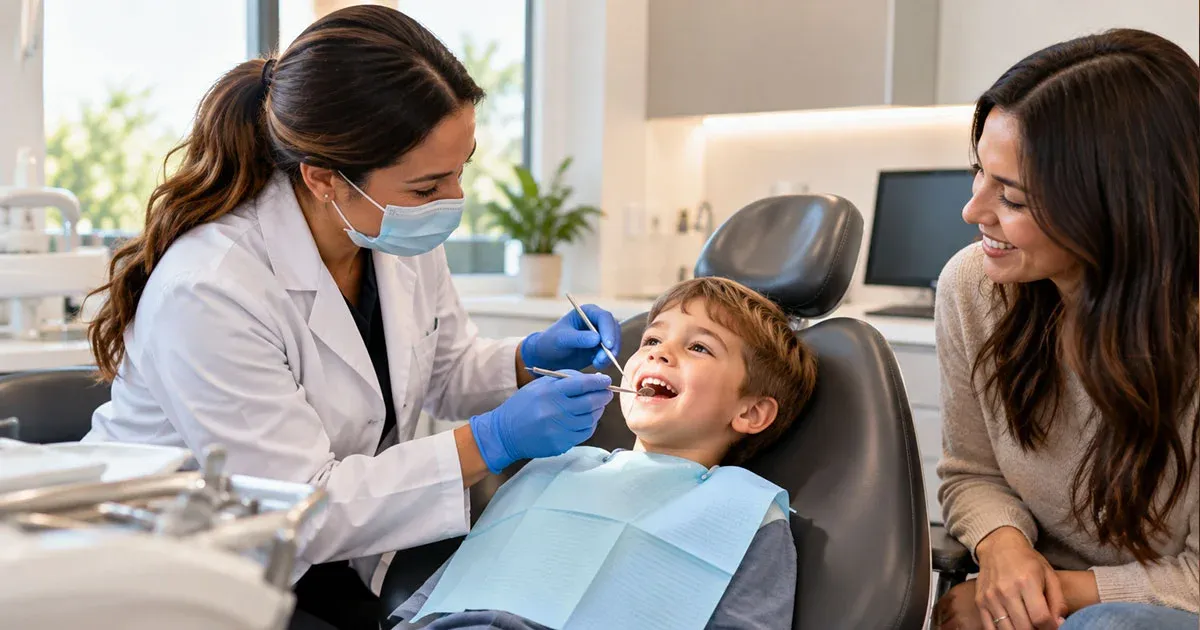
A first appointment is usually different from a typical adult dental visit. For a very young child, the goal is often to keep the experience simple and comfortable.
Depending on your child’s age and needs, the dentist may:
- Examine the teeth, gums, bite, and other oral tissues
- Look for signs of early tooth decay
- Assess how the teeth and jaws are developing
- Discuss brushing and appropriate fluoride use
- Talk about diet and habits that may affect the teeth
- Answer parents’ questions about oral development
- Recommend an appropriate schedule for future dental visits
The exact appointment will depend on the child. Some young children are comfortable right away, while others need more time to get familiar with the dental environment.

How Parents Can Prepare Their Child
Parents can help make the first dental appointment feel like a normal part of staying healthy.
Talk about the dentist using simple, positive language. Explain that the dentist will look at and count their teeth and help keep their mouth healthy.
Try to avoid introducing ideas that could create unnecessary anxiety. For example, there is usually no reason to tell a child that something “won’t hurt” if they have not expressed concern about pain.
You can also read age-appropriate books about visiting the dentist or practice opening your mouth and counting teeth together.
Whenever possible, choose an appointment time when your child is normally rested rather than tired or hungry.
The First Visit Is Also for Parents
An early dental appointment is not only about examining your child. It also gives parents an opportunity to learn how to care for rapidly changing teeth.
A systematic review examining preventive dental visits in young children found mixed evidence regarding long-term outcomes but noted that early preventive visits may be associated with more subsequent preventive care and, in some groups, fewer restorative visits and lower nonpreventive dental expenditures. The researchers also emphasized the importance of parent education and individualized risk assessment.
Your dentist may discuss topics such as brushing technique, toothpaste amounts, fluoride, snacks and drinks, nighttime feeding, and cavity risk.
These conversations can be particularly helpful because recommendations may change as your child gets older.
What If Your Child Is Nervous?
Some nervousness around a new environment is completely normal.
Avoid making the appointment feel like a test your child has to pass. If they are hesitant, the dental team can adjust the visit based on what the child is comfortable doing.
Parents can help by staying calm and letting the dental team explain each step in child-friendly language.
A positive introduction to dentistry can make future visits feel more familiar. The goal is to gradually establish dental appointments as a routine part of caring for the body rather than something reserved for toothaches or emergencies.
What If Your Child Already Has a Dental Problem?
You do not need to wait for a routine appointment if you notice something concerning.
Contact a dentist if your child develops persistent tooth pain, visible spots or holes in a tooth, swelling, unusual bleeding, dental trauma, or another noticeable change.
Evidence reviewed for the U.S. Preventive Services Task Force found that the effects of very early preventive dental visits can vary depending on a child’s existing cavity risk and oral health. This reinforces why dental recommendations should be based on each child’s individual circumstances rather than a one-size-fits-all approach.
Early evaluation allows a dentist to determine whether treatment, monitoring, or changes to home care are appropriate.
Building Healthy Dental Habits at Home
Dental visits are only one part of protecting a child’s teeth. Daily habits at home matter just as much.
Parents should help young children brush because they generally do not yet have the coordination to clean every tooth effectively on their own. Follow your dentist’s recommendations regarding fluoride toothpaste and brushing techniques appropriate for your child’s age.
It is also helpful to limit frequent exposure to sugary foods and drinks, especially between meals and around bedtime.
Most importantly, make oral care predictable. When brushing and dental visits become normal parts of family routines, children can develop habits they can carry into adolescence and adulthood.
Schedule Your Child’s First Dental Visit in Encino
A first dental visit does not need to be complicated. It is an opportunity to check your child’s developing smile, identify concerns early, answer your questions, and establish a foundation for ongoing preventive dental care.
Encino Friendly Dental Center provides family, cosmetic, and general dentistry for patients in Encino, CA, and surrounding areas.
If your child is approaching their first birthday, has recently developed their first teeth, or has never visited a dentist, consider scheduling an appointment with Encino Friendly Dental Center. Starting early can make professional dental care a familiar, comfortable part of your child’s health routine.