
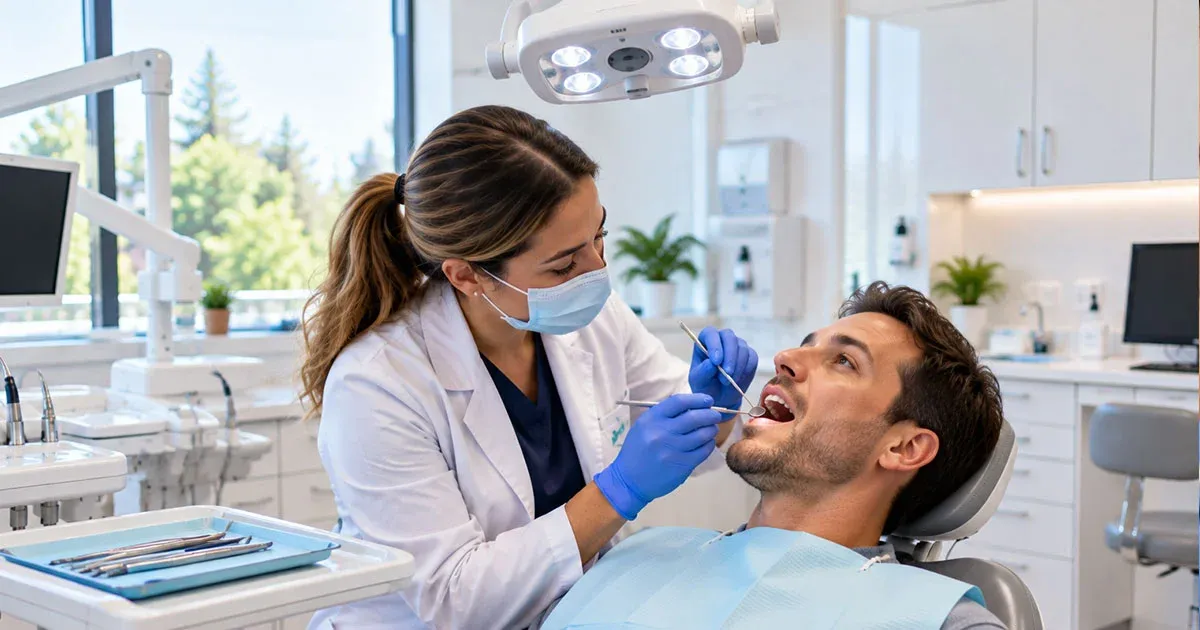
Dental emergencies rarely happen at convenient times. You may wake up with severe tooth pain, break a tooth while eating, notice sudden swelling, or lose a filling or crown without warning. When something feels wrong, knowing what will happen at an emergency appointment can make the situation easier to manage.
At Encino Friendly Dental Center, patients in Encino, CA, and surrounding areas can receive professional dental care for urgent problems. A same-day dental emergency appointment generally focuses on identifying the cause of your symptoms, relieving pain, protecting your oral health, and determining whether you need additional treatment.
Here is what you can typically expect.
What Counts as a Dental Emergency?
Not every dental problem requires immediate treatment, but you should have certain symptoms evaluated promptly. The American Dental Association (ADA) distinguishes true emergencies such as uncontrolled bleeding or swelling that threatens the airway, from urgent dental conditions that require prompt attention to relieve severe pain or reduce the risk of infection.
Common reasons to request a same-day dental appointment include:
- Severe or persistent toothache
- A cracked, fractured, or broken tooth
- Facial or gum swelling
- A dental abscess or suspected infection
- A knocked-out or loosened permanent tooth
- A lost filling or crown causing significant discomfort
- Dental trauma
- Bleeding that is difficult to control
If you have major facial trauma, difficulty breathing or swallowing, or another potentially life-threatening condition, seek emergency medical care immediately.
Step 1: The Dental Office Will Ask About Your Symptoms
When you contact a dentist for an emergency appointment, the first step is usually a brief assessment of what is happening.
Be prepared to explain when the problem started, where the pain is, whether you have swelling or bleeding, and whether an injury caused it. You may also be asked about fever, medications, allergies, medical conditions, and previous treatment involving the affected tooth.
These questions help the dental team determine the urgency of your situation and prepare for your arrival.
Step 2: Your Dentist Will Examine the Problem
Once you arrive, the priority is finding the source of your symptoms.
Your dentist may examine the affected tooth, gums, jaw, and surrounding tissues. Depending on the problem, they might gently check whether the tooth is sensitive to pressure, temperature, or biting.
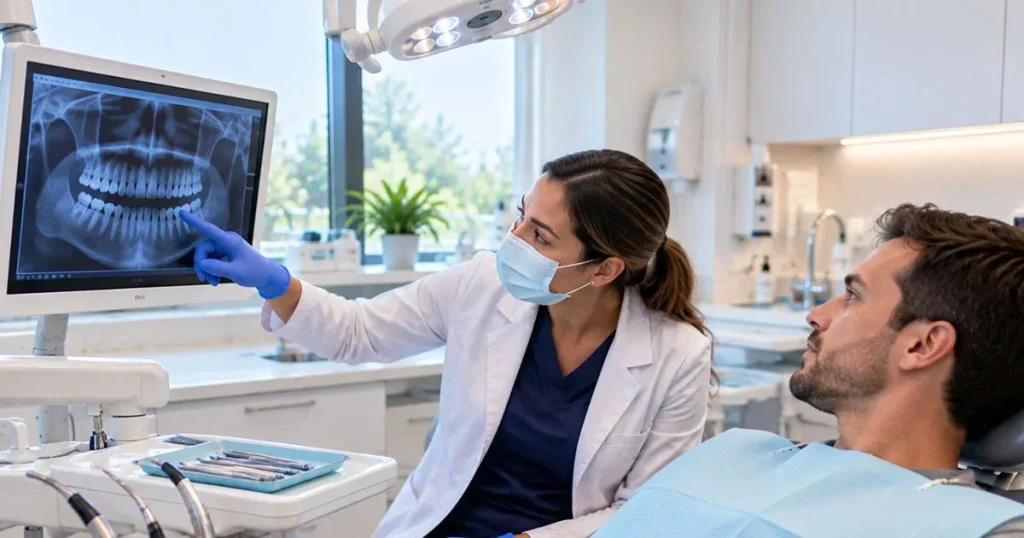
Dental X-rays may also be recommended. An X-ray can reveal problems that are not easily visible during a standard examination, including decay beneath a restoration, infection around a tooth root, or certain types of dental trauma.
Do not hesitate to tell the team if you are nervous. A 2021 systematic review and meta-analysis involving more than 72,000 adults estimated that dental fear and anxiety affected about 15.3% of adults, demonstrating that dental anxiety is relatively common.
Step 3: The Immediate Problem Is Diagnosed
Emergency tooth pain can have many causes, so identifying the underlying problem matters.
For example, severe pain might result from deep tooth decay, inflammation inside a tooth, an infection, a cracked tooth, gum problems, or trauma. Swelling could indicate an infection that needs prompt attention.
Rather than simply treating the symptom, the dentist will identify the cause and explain the available treatment options.
This is important because research has also found a consistent relationship between dental anxiety and pain during dental treatment. Clear communication about what is happening and what treatment involves can therefore be an important part of emergency dental care.
Step 4: You May Receive Same-Day Treatment
What happens next depends on the diagnosis.
Some problems can be treated during the emergency appointment. Depending on your condition, treatment could involve repairing a damaged tooth, replacing or temporarily protecting a lost restoration, draining an infection, beginning root canal treatment, or extracting a tooth that cannot reasonably be saved.
In other situations, the dentist may provide temporary treatment to stabilize the problem and schedule a follow-up appointment for definitive care.
The goal of the emergency visit is not necessarily to complete every stage of treatment immediately. It is to address urgent concerns and establish the safest next step.
Will You Automatically Receive Antibiotics?
No. Antibiotics are not appropriate for every toothache or dental infection.
An ADA evidence-based guideline found that antibiotics provide negligible benefits in many cases of pulpal and periapical dental pain and swelling when definitive dental treatment is available. The guideline recommends prioritizing dental treatment and generally reserving antibiotics for situations involving systemic symptoms, such as fever or malaise, or increased risk of infection progression.
Your dentist will determine whether antibiotics are appropriate based on your examination, medical history, and symptoms.
What About Pain Relief?
Pain control is often an immediate concern for emergency dental patients.
Depending on your condition and health history, your dentist may discuss appropriate over-the-counter or prescription options. ADA-supported guidance identifies nonsteroidal anti-inflammatory drugs (NSAIDs), alone or in combination with acetaminophen when appropriate, as first-line options for many types of acute dental pain.
Always follow your dentist’s instructions and disclose medications or medical conditions that could affect which pain relievers are safe for you.
What Happens After the Emergency Appointment?
Before you leave, your dentist should explain what was found, what treatment was performed, and whether you need additional care.
You may receive instructions about eating, brushing, medication, swelling, or protecting the treated area. If you need additional treatment, schedule it promptly rather than waiting for symptoms to return.
Emergency treatment may relieve immediate discomfort, but completing recommended follow-up care helps address the underlying dental problem.
How to Prepare for a Same-Day Dental Visit
If possible, bring your medication list, insurance information, and details about relevant medical conditions. If a tooth has been damaged, save any broken pieces and bring them with you.
Most importantly, contact the dental office as soon as you recognize an urgent problem. Waiting can make some dental conditions more complicated.
Need an Emergency Dentist in Encino? Contact Encino Friendly Dental Center
Dental pain, swelling, broken teeth, and unexpected injuries can be stressful, but you do not have to guess about the next step.
If you need urgent dental care in Encino, CA, contact Encino Friendly Dental Center. The dental team can evaluate your symptoms, identify the cause, and recommend appropriate treatment to relieve discomfort and protect your oral health.
Seeking care promptly can make it easier to address the problem before it becomes more serious.


